A trailer brake controller lets you adjust how the trailer’s brakes work with your tow vehicle. If your trailer has electric brakes, you need a compatible controller to operate them during normal towing. A hitch and a seven-way socket alone do not tell you whether that controller is installed.
This guide walks you through the choices, the connections to check and the basics of setting gain. Whether you haul enclosed cargo out of Spearfish, tow livestock near Belle Fourche or head through the Black Hills, start with the equipment on your actual truck and trailer.
Carl’s Trailer Sales installs brake controls and electrical plugs at its Belle Fourche shop. If you would rather have the setup checked before towing, ask about brake controller installation and trailer service.
What does a trailer brake controller do?
An electric trailer brake controller manages the electrical output sent to the trailer’s brakes. When you press the truck’s brake pedal, the controller applies the trailer brakes according to its design and settings. That gives the trailer its own braking contribution rather than leaving every stop to the tow vehicle.
Most controllers give you an output adjustment, often called gain, and a manual control. Depending on the model, you may also have a connection indicator, fault messages, sensitivity adjustments or stored trailer profiles.
A controller cannot compensate for worn brakes, damaged wiring or an overloaded trailer. The truck, hitch, trailer and braking system still need to be suitable for the load. If you are sorting out those limits, Wareing Motors’ payload vs. towing capacity guide explains why the amount you can carry and the amount you can pull are different numbers.
Do you need a brake controller?
Identify the trailer’s brake system first.
- Electric brakes: You need a compatible controller for normal braking from the tow vehicle.
- Electric-over-hydraulic brakes: You need a controller approved for the trailer’s hydraulic actuator. Check the exact pairing and any required controller mode.
- Conventional hydraulic surge brakes: These operate through a mechanical surge actuator at the coupler, rather than the usual electric brake-controller signal.
- No trailer brakes: Adding a controller will not add brakes to the trailer. Check whether that trailer and load are appropriate for your vehicle and the applicable rules.
Do not use a general online weight threshold to decide whether your combination is legal. Brake requirements can depend on the jurisdiction and how the trailer is used. Check official rules for South Dakota and every state on your route, along with your vehicle and trailer manuals. The trailer’s rating label helps identify its limits, but does not replace those rules.
A seven-way plug does not prove you have a controller
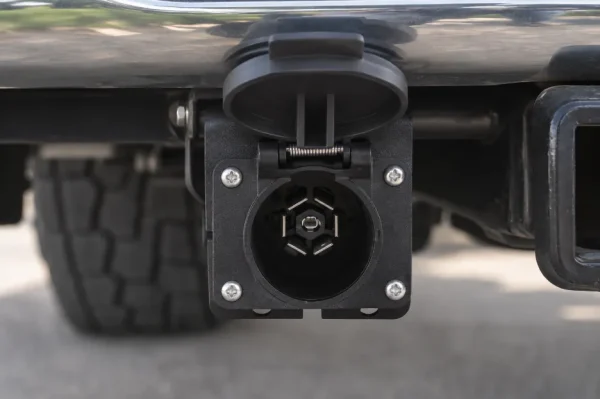
A seven-way connection can carry several circuits. Its presence does not confirm that a controller is installed, that the brake-output circuit is complete or that the equipment is compatible.
The same caution applies to a tow package. Find the controller controls and confirm the equipment in your owner’s manual or vehicle build information. A trailer menu alone is not enough to identify every installed towing feature.
Proportional vs. time-delay brake controllers
These two terms describe how the controller responds when you brake. They do not describe where it mounts.
| Type | How it responds | What to consider |
|---|---|---|
| Proportional | Common aftermarket models sense deceleration and vary trailer braking to suit the stop | Check mounting requirements, calibration and trailer compatibility |
| Time-delay | Builds output over time toward a preset level when you apply the brakes | You adjust output and, where provided, how quickly it builds |
A proportional brake controller responds differently to a gentle slowdown and a harder stop. That can make it a useful choice when your towing involves changing traffic conditions and frequent braking. Some factory-integrated systems use vehicle braking information rather than relying only on an aftermarket-style inertia sensor.
A time-delay controller follows its selected output and timing settings. It can provide a straightforward interface, but those settings need attention so the trailer does not feel abrupt during a light stop or slow to contribute during braking.
Neither label guarantees compatibility with your trailer. Compare the supported brake type, number of braked axles, installation requirements and accessibility of the manual control. For electric-over-hydraulic equipment, verify the actuator compatibility rather than assuming every proportional controller will work.
For a trailer you use regularly, think about the daily experience too. Can you read the display, reach the controls and understand the fault messages without searching through a menu?
Installation styles and vehicle compatibility
You can get similar braking functions in quite different packages. Choose the connection and mounting style around your vehicle, not just the appearance of the controller.
Factory-integrated controller
A factory controller uses the vehicle’s controls and displays. Before buying another unit, check whether your truck already has one and whether it supports the trailer’s brake system.
Use the owner’s manual for the exact model year and equipment. If you are buying a truck as well, the Ford Super Duty towing capacity guide and 2025 Ram towing capacity guide can help you frame the truck-side questions. Confirm the actual truck’s equipment separately.
Under-dash controller
This puts the controller and its controls together in the cab. Some vehicles accept a model-specific plug-in harness. Others need additional wiring and installation work.
Mounting position matters, particularly with controllers that sense movement. The unit must follow its manufacturer’s orientation requirements while staying clear of your legs, pedals and other controls.
Dash knob with a hidden module
This style keeps a small control within reach while the main module mounts elsewhere. It can suit a cab where you want less equipment below the dash.
The small visible knob does not eliminate the installation work. The module, wiring, mounting location and vehicle connection still need to match the manufacturer’s instructions.
Wireless or seven-way plug-in controller
Some controllers connect at the seven-way socket and use an app or separate control. They may suit drivers who move between compatible tow vehicles or want to avoid a conventional dash-mounted box.
Check power and connector requirements, supported brakes, clearance around the socket and how manual braking is accessed. Read what the specific model does if its wireless connection is interrupted. Set it up before driving, rather than trying to learn an app while towing.
What to check before ordering a kit
Have your truck’s year, make, model and towing equipment available, plus the trailer’s brake type and braked-axle count. Ask whether the kit includes the correct harness and whether vehicle configuration is needed.
Trailer brake controller wiring is vehicle- and product-specific. A wire color or generic diagram is not enough to identify a safe connection. Carl’s installs brake controls and electrical plugs, so you can ask the shop to assess the complete setup instead of guessing at a splice.
Setting gain and using the manual control
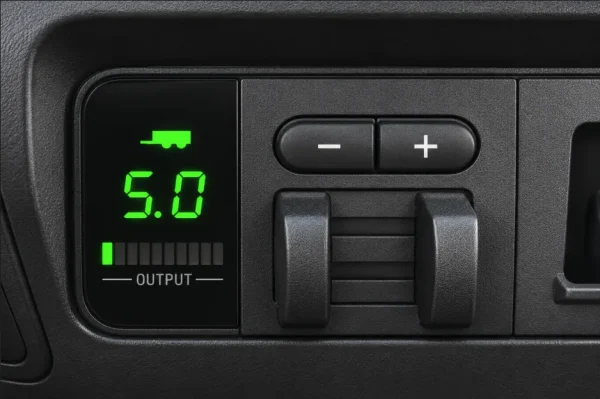
Gain controls the available trailer-brake output. Too little can leave the trailer contributing too little braking. Too much can produce harsh braking or wheel lockup.
There is no universal setting for a stock trailer, an enclosed trailer or a certain truck. The controller, brake system, load and conditions all matter. A number that works for your neighbor is not a setup procedure.
Start with your own manuals
Read the vehicle, controller and trailer instructions together. Use the required brake mode and complete any calibration before the driving check.
An empty, level parking area may be suitable only if it provides the space and conditions your manufacturer’s procedure requires. Some procedures specify a particular test speed and surface. Do not substitute a cramped lot, public traffic or a slippery road.
A practical setup checklist
- Prepare the combination. Hitch and load the trailer correctly, make the electrical connection and confirm that the brakes are in serviceable condition. Use the manufacturer’s checks for the breakaway system.
- Confirm the controller setup. Select the correct brake mode if your controller offers one. Check its connection indication and resolve any fault message before continuing.
- Use the specified starting setting. Follow your controller or vehicle manual rather than a generic gain number. Make adjustments while safely stopped where instructed.
- Perform the prescribed driving test. Follow the manual’s speed, surface and manual-control instructions in a traffic-free area.
- Adjust and repeat as directed. Aim for effective braking without wheel lockup or an abrupt tug. If the response remains weak or unpredictable, stop testing and have the system inspected.
Do not keep raising gain to work around a mechanical or electrical fault. A controller display can show an output command without proving that every wheel brake is working properly.
Recheck the settings when you change trailers or loads, and when your manual calls for adjustment as conditions change. An empty equipment trailer and the same trailer loaded for work should not automatically be treated as the same setup.
What the manual override is for
The manual control lets you command trailer braking separately from the tow vehicle’s brake pedal. Its permitted uses vary by controller and vehicle.
Follow the exact manual for setup and operation. Do not assume that advice to apply manual trailer brakes during sway is appropriate for your truck. Some OEM instructions specifically warn against that use. Likewise, do not treat the controller as a parking brake or a way to hold a parked combination on a grade.
Learn where the control is before you leave. If you are unsure how your system should respond, ask for a demonstration using your equipment.
Check the trailer side too
The controller is only one part of the system. Before choosing one, confirm how many axles have brakes and whether those brakes are electric or electric-over-hydraulic. Match the controller’s published capacity to the actual equipment, not just the trailer’s overall size.
Check trailer ratings and your intended loaded weight as part of the purchase. A controller does not increase the trailer’s GVWR or the truck’s towing rating. Horse, stock and enclosed trailers can have different brake equipment even when they look similar from the sales lot.
If you are still comparing trailers, the guides to enclosed trailer sizes and aluminum vs. steel trailers cover other buying considerations. Confirm the brakes on the specific unit you choose.
Breakaway protection is separate from normal braking
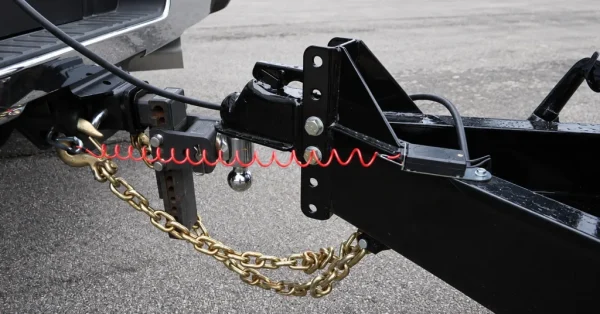
The breakaway system is intended to apply the trailer brakes if the trailer separates from the tow vehicle. On electric-brake systems, its battery, switch and cable need attention alongside the controller.
A working breakaway system does not replace a controller for routine stops. Follow the equipment instructions for inspection and testing. Some controller manuals require disconnecting the trailer’s electrical plug before a breakaway test to prevent controller damage.
For connection, wiring and breakaway problems, use Carl’s separate trailer brakes not working guide. If the brakes still do not respond correctly, have the system checked before towing.
When to bring your setup to Carl’s
Bring the question to the shop if you have bought a different trailer, cannot confirm controller compatibility, need an installation or get inconsistent braking after following the setup procedure.
Carl’s Trailer Sales installs brake controls and electrical plugs in the shop behind its Belle Fourche sales lot. Customers come from Belle Fourche, Spearfish, Sturgis, Rapid City and nearby ranch communities.
When you call, have these details ready:
- Tow vehicle year, make and model
- Existing controller make and model, if known
- Trailer type, brake system and braked-axle count
- Any warning message and when it appears
- Whether the issue changes with a different trailer or load
Ask about parts, scheduling and the work your combination needs. Installation cost depends on the equipment and job, so request a quote rather than relying on a generic online price.
Trailer brake controller FAQ
Will electric trailer brakes work without a controller?
For normal braking from the tow vehicle, electric trailer brakes need a compatible controller. The separate breakaway system is for a separation emergency, not everyday stops.
Do I need a controller if I have a seven-pin plug?
You may. The plug alone does not prove a controller is installed or the brake circuit is ready. Check the vehicle’s equipment and the trailer’s brake type.
Does a tow package include a brake controller?
Not necessarily. Package contents vary. Confirm the actual vehicle’s equipment using its manual, build information and controls rather than assuming the package name covers everything.
What should my trailer brake controller be set to?
Use the setup procedure for your controller and trailer. There is no single correct gain number for every load. Recheck it when the trailer or loading changes.
How do I know the controller is working?
Check its connection indication, resolve fault messages and perform the manufacturer’s driving test. A connected message or illuminated display alone does not prove proper braking at every wheel.
How does the controller detect the trailer?
Detection methods vary by model. Check your manual for what its connected message means and how it handles your brake system. If it reports no trailer or a connection fault, have the connection checked rather than assuming the display is wrong.
Is REDARC or Tekonsha better?
Compare specific models for brake compatibility, axle capacity, controls and installation style. The brand name alone cannot tell you which fits your combination. Ask about fit and support before choosing.
Where does the red wire go on a brake controller?
Use the exact controller instructions and vehicle-specific wiring information. Do not connect it based only on color or a generic diagram. Have a qualified installer verify the correct circuit.
How much does brake controller installation cost?
Call Carl’s with your vehicle and trailer details for a quote. The controller, harness, existing wiring and required installation work affect the job.
Get your truck and trailer ready to tow
Call Carl’s Trailer Sales at (605) 892-4032 or contact the Belle Fourche shop to discuss your brake controller setup.
Visit 10958 US HWY 212, Belle Fourche, SD 57717. If you are shopping for a trailer too, browse trailers for sale or used trailers in Belle Fourche, then ask about the brake equipment on the unit you are considering.