Carl’s Trailer Sales
Enclosed trailer sizes explained: widths, lengths, height, GVWR, and how to match a box to your truck and cargo.
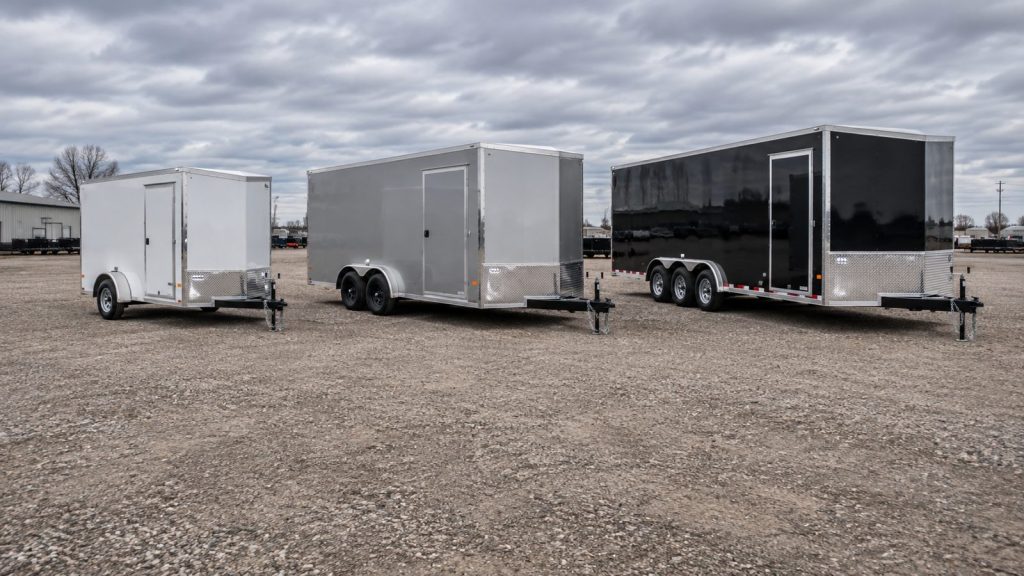
Picking an enclosed trailer size starts with what you haul, then what your truck can tow, then where you park. Nominal sizes such as 6×12 or 8.5×20 are marketing sizes. Measure interior length, width, height, and the rear door opening before you buy.
Empty weights vary by builder, axle rating, V-nose, ramp door, insulation, and cabinets. The tables below give common starting sizes, not exact weights. For the trailer you want, read the ratings on the certification label and ask for the builder sheet or a scale weight. See our enclosed trailers page and current inventory for what is on the lot today.
Quick picks | Dimensions | Common sizes | Weight and GVWR | How to choose | Axles | FAQ
Quick answer: what size do you need?
| Use | Common starting sizes | Watch for |
|---|---|---|
| Tools / weekend cargo | 5×8, 6×10, 6×12 | Interior height and side door |
| Contractor / landscaping | 6×12, 7×14, 7×16 | Payload, ramp, E-track |
| Motorcycles / ATVs | 6×12, 7×14, 7×16 | Tie-downs, ramp angle, width |
| Car hauler | 8.5×20, 8.5×24 and up | Vehicle length + ramp + height |
| Moving / large cargo | 7×16, 8.5×20, 8.5×24 | Truck tow rating and tongue weight |
Use these as starting points. Measure your largest item and leave room to walk and strap cargo.
Common enclosed trailer dimensions
Common widths are 5 foot, 6 foot, 7 foot, and 8.5 foot widebody. Lengths often run from 8 feet into the 28 and 32 foot range. Interior height options commonly land around 6 foot 6 inch, 7 foot, and 7 foot 6 inch and taller, depending on the builder.
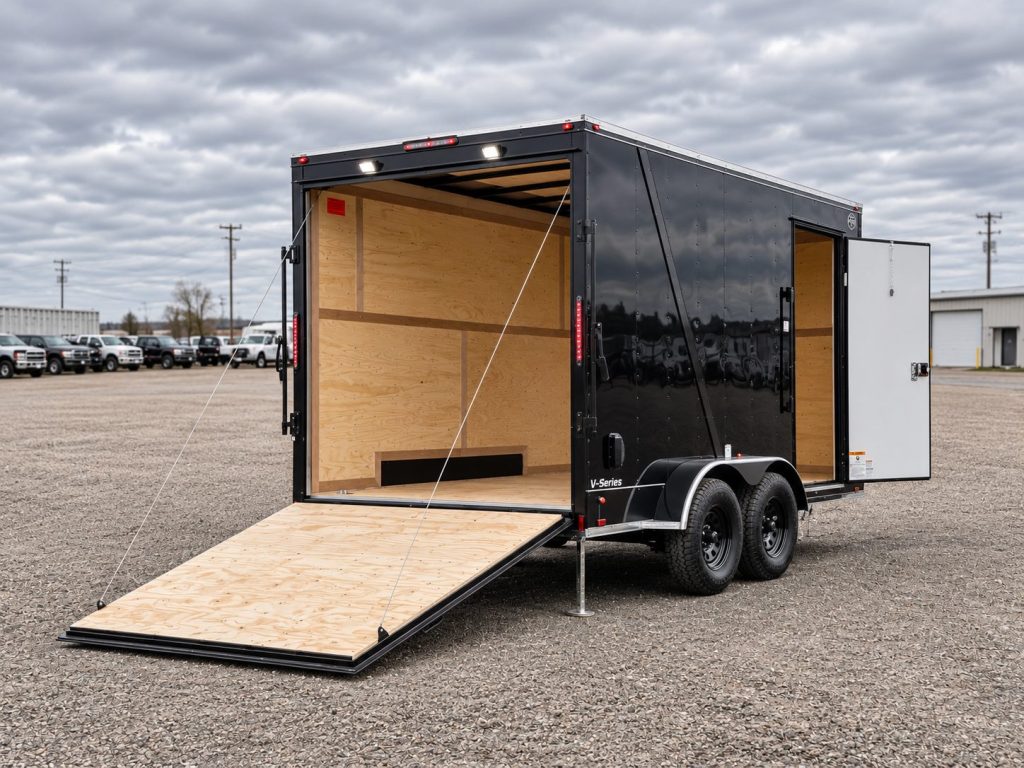
Nominal size is not the same as usable space. A V-nose adds exterior length versus floor length. Wheel wells pinch width. Ramp doors and barn doors change how you load. Always measure the door opening and the clear floor.
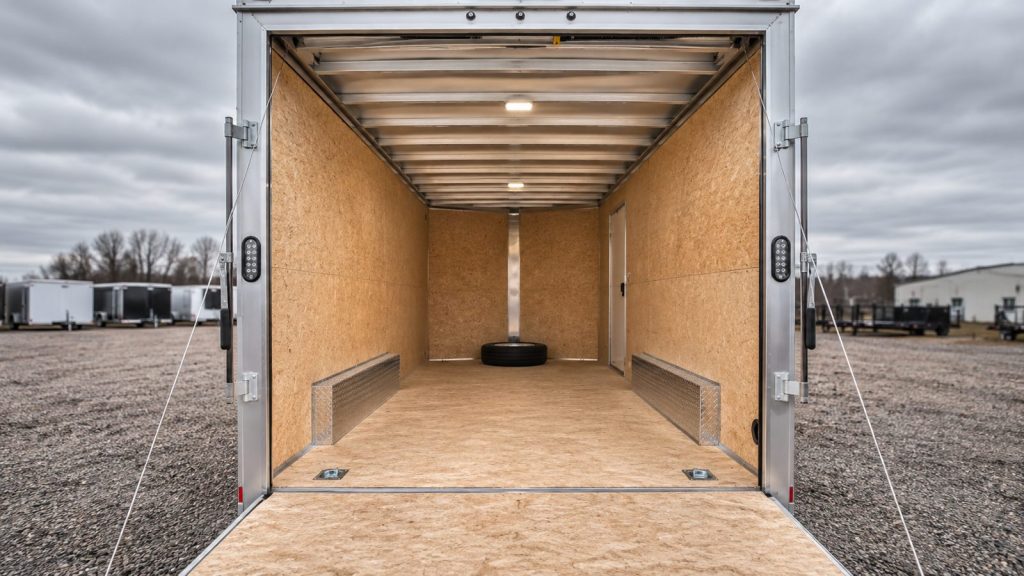
Common sizes and typical uses
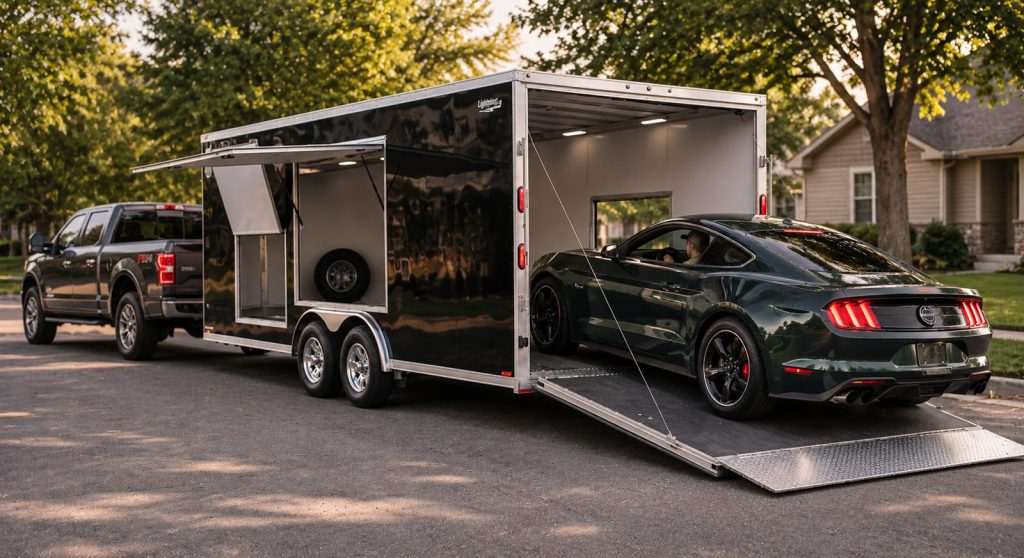
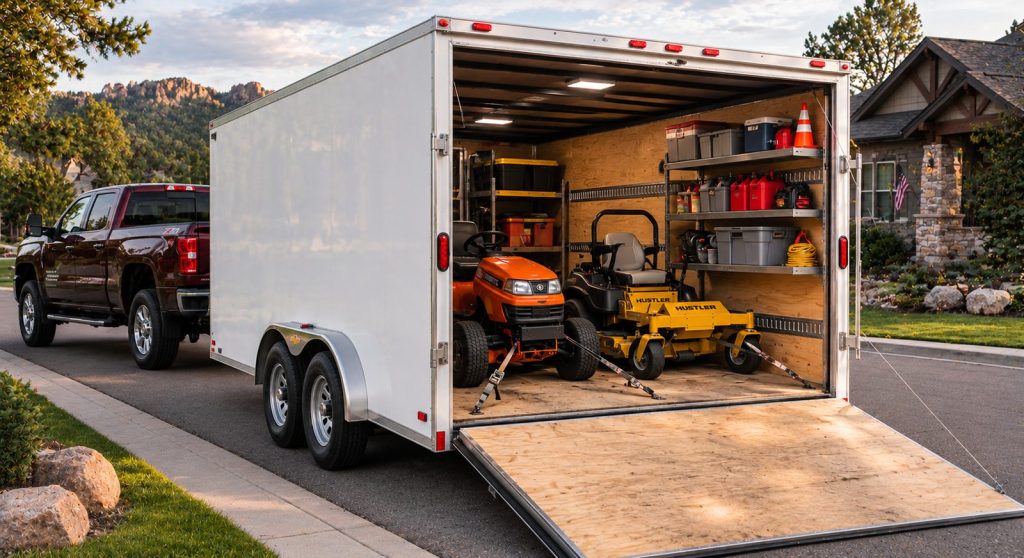
5×8 and 6×10 suit light cargo and camping gear. Measure first if you want to haul dirt bikes, since fit depends on the bikes, the door opening, and tie-down space. 6×12 is a frequent mid-size pick for tools and weekend loads. 7×14 and 7×16 give contractors and UTV owners more floor, and many come with tandem axles. 8.5×16 through 8.5×24 and longer move into car hauler and large cargo territory. A wider body gives you room for a car, cabinets, or two machines side by side.
Empty weight, GVWR, payload, and tongue weight
GVWR is the maximum loaded weight of the trailer. Empty weight is the trailer as built. Payload is roughly GVWR minus empty weight. Tongue weight is the downward force on the hitch. A common rule of thumb for conventional trailers is about 10 to 15 percent of the loaded trailer weight on the tongue. Confirm hitch class, receiver rating, and truck payload. Tongue weight counts against truck payload.
Your trailer’s empty weight depends on its build and options, so two 6×12 trailers can weigh different amounts. The certification label lists ratings such as GVWR, not always the empty weight. Ask for the builder sheet, or weigh the empty trailer on a scale. Our trailer GVWR vs payload guide walks through the math.
How to choose the right size
List what you haul and measure the largest and heaviest items. Add room for tie-downs, shelves, and walking space. If the cargo barely fits, you will not have room to strap it down. Check your tow vehicle’s towing capacity, hitch rating, and brake controller needs. Measure storage and driveway limits. Plan for the next machine you might buy, without jumping so large that the truck is overloaded.
Never exceed the truck’s tow rating, hitch class, or payload. If you are choosing a hitch style next, read bumper pull vs gooseneck. For gooseneck install help, see gooseneck hitch installation.
Single axle vs tandem axle
Single-axle enclosed trailers stay simpler and often lighter for small cargo. Tandem axles support higher GVWR and heavier loads. Axle ratings commonly appear in 3,500 pound, 5,200 pound, and 7,000 pound classes depending on the build. Confirm the plate. As weight goes up, brakes and a working breakaway system matter more. Check South Dakota requirements for lighting, brakes, and plates for your setup before you tow.
Compare flatbed and dump options if an enclosed box is not the right tool. Our trailer service and repair shop can help after you buy.
Enclosed trailer sizes FAQ
What is the most popular enclosed trailer size?
6×12 and 7×14 are common sizes for tools and mid-size cargo. Your cargo measurements matter more than what is popular, so measure your load before you choose.
How much does a 6×12 enclosed trailer weigh empty?
It depends on the manufacturer, axle rating, ramp, and options, so there is no single number. The certification label lists ratings such as GVWR. Ask for the builder sheet, or weigh the trailer you are considering.
What size enclosed trailer do I need for a car?
Measure the vehicle length, width, and height, then add ramp clearance and tie-down space. Many car haulers land in the 8.5-foot width and 20-foot-plus length range. Confirm interior height for spoilers, racks, and lifted suspensions.
Do I need a tandem-axle enclosed trailer?
Choose tandem when your loaded weight is more than a properly rated single-axle trailer can carry. Check the ratings on the specific trailer and load it the way the manufacturer recommends. Match axle rating and brakes to the loaded weight.
Can my half-ton tow an enclosed trailer?
Sometimes. It depends on the truck’s tow rating, hitch, payload, and the loaded trailer weight including tongue weight. Check the payload on the truck’s door-jamb label and the tow rating for your exact truck, then compare them to the loaded trailer weight. Do not rely on brochure peaks alone.
See enclosed trailers in Belle Fourche
Wareing Carl’s Trailer Sales is at 10958 US HWY 212, Belle Fourche, SD 57717. Call 605-892-4032 or toll-free 800-861-4032. Bring cargo measurements and your truck’s tow and payload numbers. We will walk the lot with you.